Structured Cabling & Data Centre Standards Guide
Structured cabling outlives most of the equipment plugged into it, so the standards you specify and the contractor you choose have a long tail. This guide explains the key standards, how data centre cabling differs from office cabling, and what to check before you sign with a contractor.
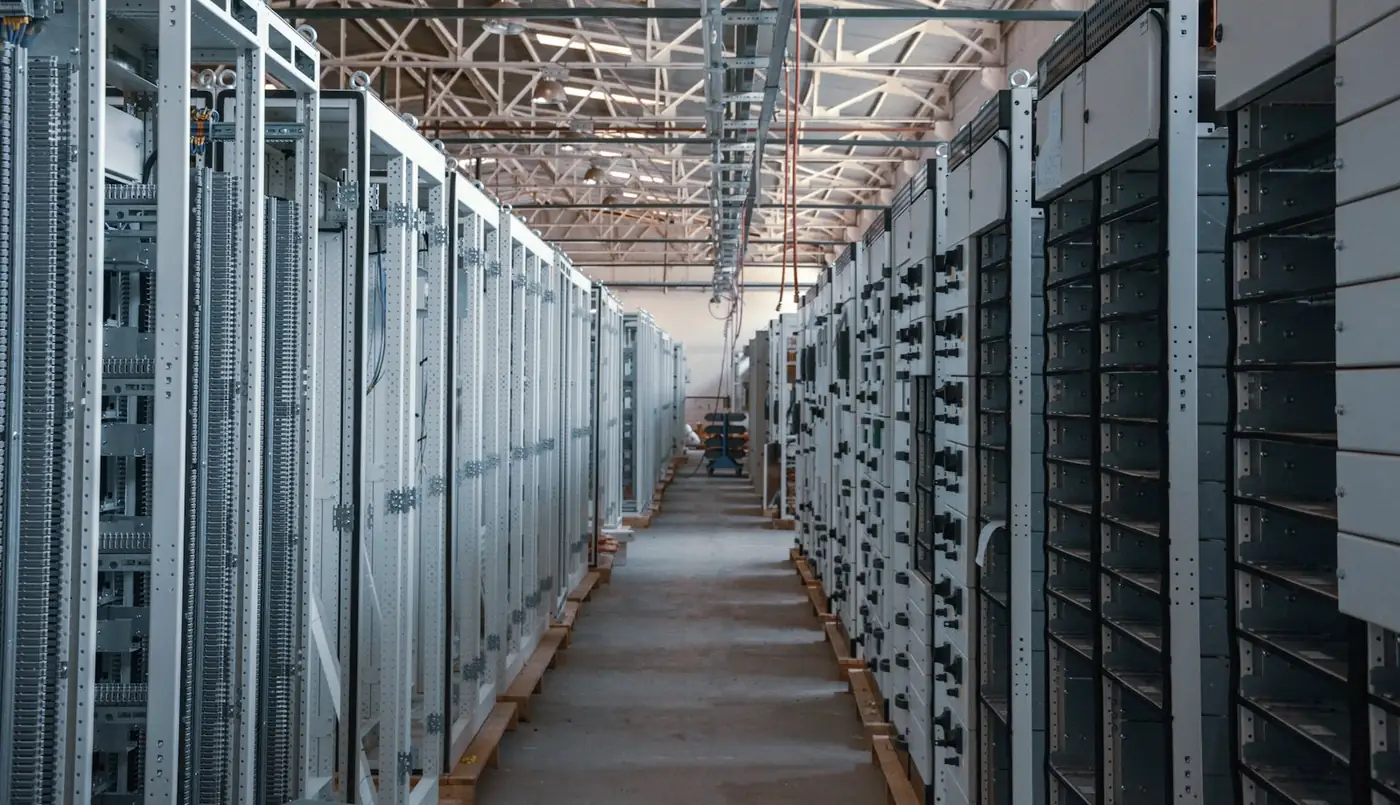
What structured cabling is and why standards matter
Structured cabling is a standardised system of copper and fibre cables, connectors, panels and pathways that supports any application: data, voice, Wi-Fi access points, CCTV, access control and building systems.
Standards make the system predictable. They define performance categories, maximum lengths, topology, installation practice and test methods. When a project follows them, any compliant equipment will work on the cabling for years, and any competent team can maintain it. In Egypt's fast-growing new cities, business parks and government buildings, specifying the right standards at design stage avoids costly rework later.
Cabling is also the layer most often value-engineered away. A cheaper category, untested links or missing documentation save little at tender stage but cost far more when the network must be upgraded or a fault traced. Treat cabling as a long-term asset with its own specification, not as an item buried in the electrical package.
The key standards to know
Two families dominate, and they are largely aligned:
- ANSI/TIA-568 (North American): covers generic cabling for commercial buildings, balanced twisted-pair components and optical fibre components.
- ISO/IEC 11801 (international): defines generic cabling for offices, industrial premises, homes and data centres in separate parts.
Supporting standards complete the picture:
- TIA-569 for pathways and spaces such as risers, trays and telecom rooms.
- TIA-606 for administration and labelling.
- TIA-607 for bonding and grounding (earthing).
- TIA-942 for data centre telecommunications infrastructure, including topology, redundancy and site requirements.
- ISO/IEC 14763-3 and the TIA test standards for field testing of copper and fibre.
Specify one family consistently in your tender, and name the latest editions, rather than mixing clauses from several documents.
Copper and fibre choices
Copper. Category 6A (Class EA in ISO terms) is the sensible default for new horizontal cabling. It supports 10GBASE-T up to 100 metres and gives headroom for Wi-Fi 6 and Wi-Fi 7 access points and higher-power PoE. Shielded or unshielded variants both work when installed correctly; the choice depends on the environment and the manufacturer's system warranty.
Fibre. Use single-mode (OS2) for backbones between buildings and long risers. Multimode (OM4, or OM5 where wideband multimode applications are planned) suits short, high-density links inside data centres. Pre-terminated MPO/MTP trunks speed installation and support 40G, 100G and higher parallel optics.
Pathways. Cable trays, separation from power, bend-radius control and fire-stopping all affect performance and safety. A strong cabling product installed in a poor pathway will still fail.
Mix and match carefully. Using connectors, cords and cable from one manufacturer's tested system is the usual way to guarantee channel performance and qualify for a system warranty. Mixing brands may work, but the burden of proof then falls on the installer.
Data centre cabling: what changes
Data centres bring density, uptime and change management to the fore. TIA-942 and ISO/IEC 11801-5 describe functional areas such as the entrance room, main distribution area, horizontal distribution areas and equipment distribution areas.
Practical design points:
- Topology: structured architectures, such as top-of-rack or end-of-row, with patching in defined zones rather than point-to-point cables.
- Redundancy: diverse entrance routes and duplicate backbone paths, matched to the rating level you target. TIA-942 defines four rating levels, from Rated-1 to Rated-4.
- Airflow: cable management that keeps hot and cold aisles clear.
- Earthing and bonding: a properly designed bonding network to protect equipment and people.
- Documentation: every port labelled and recorded, ideally in a DCIM tool.
Facilities that host regulated workloads, such as banks or government entities, should align cabling design with their wider resilience and security requirements.
Plan for growth from the start. Leave spare rack units, tray capacity and fibre strands, and design the main distribution area so that new rows can be added without disturbing live services. Retrofitting pathways in a running data centre is slow and risky.
Testing and certification
Every installed link should be tested, not sampled. For copper, a certification tester measures permanent links against the category limits for parameters such as insertion loss, NEXT and return loss. For fibre, loss testing confirms each link fits its budget, with OTDR traces for backbones.
Insist on:
- Native test files, not only PDF summaries.
- Calibrated testers and correct test limits for the specified standard.
- Results that map to the labelling scheme and as-built drawings.
Many cabling manufacturers offer a system warranty, often long-term, when a certified installer follows their rules. Confirm the exact terms in writing.
Plan testing into the schedule. Certification of a large building can take several days, and failed links must be re-terminated and re-tested before acceptance. Agree in advance who witnesses the tests and how disputed results will be resolved.
How to choose a cabling contractor
Price matters, but these questions predict quality better:
- Are the installers certified by the cabling manufacturer, and can the contractor issue a system warranty?
- Can they show method statements, sample test reports and labelling schemes from comparable sites?
- Do they design pathways, earthing and fire-stopping, or only pull cable?
- Who supervises on site, and how are punch items tracked and closed?
- Can they coordinate with civil, MEP and light-current trades?
- What documentation will be handed over at acceptance?
A detailed BOQ tied to drawings, with test and documentation requirements written in, makes bids comparable and protects you during acceptance.
Finally, check capacity. A contractor that is excellent on a single floor may struggle with a multi-building campus on a tight programme. Ask about team size, supervision ratios and how many projects they are running in parallel. Also check that they hold stock locally or have reliable supply lines, because long lead times on panels or pre-terminated trunks can delay an otherwise well-run project.
How Novatelx delivers it
Novatelx is a strategic partner of Dätwyler for cabling systems and works with Proxima-EG on civil, MEP and light-current scope. We survey the site, design cabling and pathways to the specified standard, supply certified components, install, test every link, and hand over labelled as-built documentation for acceptance.
See our data centre and structured cabling package and the related IT infrastructure package.
Frequently asked questions
Should I install Cat 6 or Cat 6A cabling?
For new projects, Category 6A is usually the better choice. It supports 10GBASE-T over the full 100-metre channel and handles modern Wi-Fi access points and higher-power PoE more comfortably. Cat 6 can still suit small, low-demand sites, but upgrading later costs far more than the initial difference.
What is the difference between TIA-568 and ISO/IEC 11801?
Both define generic structured cabling. TIA-568 is the North American standard and uses categories such as Cat 6A, while ISO/IEC 11801 is international and uses classes such as Class EA. Their performance requirements are closely aligned. Choose one family and specify it consistently in your tender.
What does TIA-942 cover?
TIA-942 is the standard for data centre telecommunications infrastructure. It defines functional spaces, cabling topology, pathways and redundancy, and sets four rating levels from Rated-1 to Rated-4, along with related site, power, cooling and security considerations. It is widely used to specify and assess data centre design.
Does every cable link need to be tested?
Yes. Best practice is to certify 100 percent of installed copper and fibre links with calibrated testers, using the limits of the specified standard. Sampling can miss faults. Full test results are also normally required for the manufacturer's system warranty and for clean acceptance.
How long does structured cabling last?
A well-designed and properly installed system is typically planned to support several generations of active equipment, often well beyond ten years. Its lifespan depends on choosing a category with headroom, quality installation, good pathways and documentation that keeps moves and changes under control.
Discuss your project with our engineers
Send the sites, the timeline and how success will be measured, and we will come back with a clear plan.
Talk to an engineer Managed SOC vs In-House SOC: How to Decide
 Bank & Fintech Cybersecurity Checklist for Egypt
 Solar & Hybrid Power for Telecom Sites in Egypt