AIoT Video Analytics & Smart Perimeter Security in Egypt
Critical sites such as substations, oil and gas facilities, data centres and logistics hubs cannot rely on guards watching dozens of screens. AIoT combines cameras, sensors and AI analytics so operators see real threats in seconds and ignore the noise.
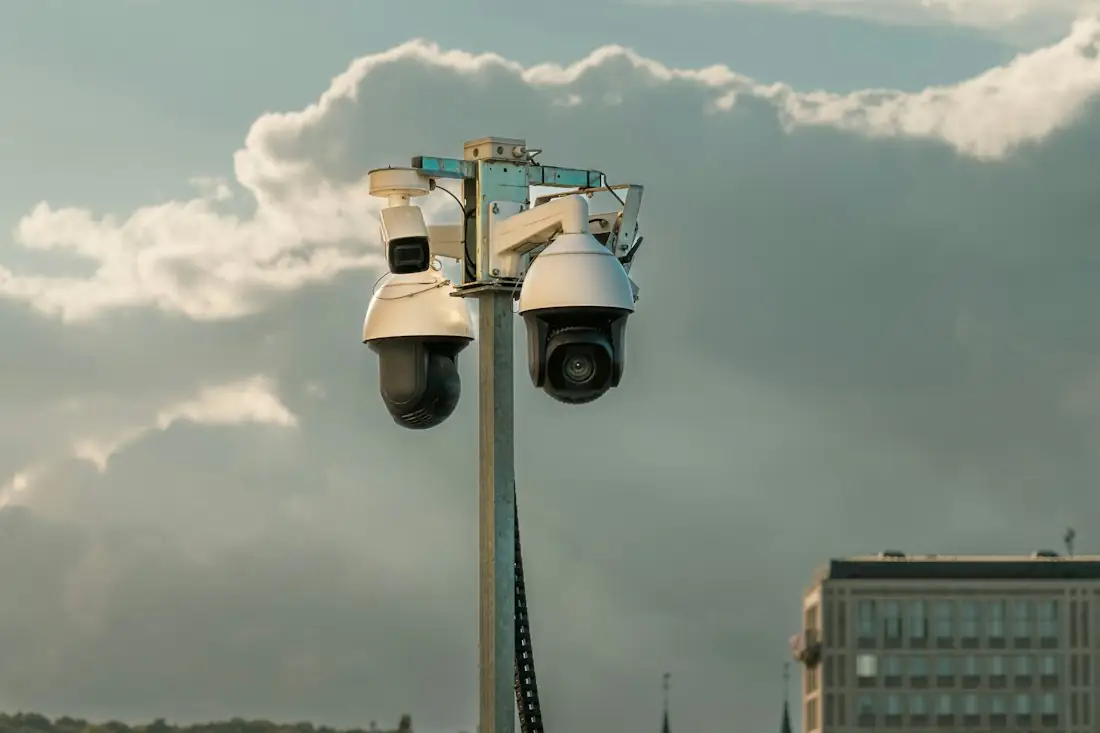
Why traditional CCTV is not enough
Conventional CCTV records well but detects poorly. A control room operator watching many feeds misses most events, and basic motion detection triggers on wind, animals, shadows and headlights. The result is alarm fatigue: real intrusions get lost among false ones.
AIoT, the combination of artificial intelligence and connected IoT devices, changes the model:
- Cameras and sensors classify what they see, such as a person, vehicle or animal, rather than just detecting motion.
- Events are correlated across devices, for example a fence vibration plus a person detected on thermal camera.
- Operators receive verified alarms with a video clip, location and recommended response.
The goal is not more cameras but better decisions. A well-designed AIoT perimeter often uses fewer, better-placed devices than a legacy system, with each one assigned a clear detection, verification or identification role.
Building blocks of a smart perimeter
A layered perimeter usually combines several technologies:
- Fence-mounted sensors, using vibration or fibre-optic sensing to detect climbing or cutting.
- Buried or ground sensors for open boundaries without a fence.
- Radar for wide open areas, tracking targets regardless of light.
- Thermal cameras for long-range detection at night, in dust or in haze, which suit desert and coastal sites.
- Visible-light and PTZ cameras for identification and tracking once an alarm is raised.
- Access control and ANPR at gates.
- Deterrence: lights, sirens and talk-down speakers triggered automatically.
The design principle is detect, verify, respond: detect early at the outer layer, verify with video before dispatching, and respond with clear procedures.
Layering matters because every technology has blind spots. Fence sensors miss someone who tunnels or bridges over the fence; cameras struggle in sandstorms; radar can be affected by moving vegetation. Combining two independent technologies on each segment keeps detection high while correlation keeps false alarms low.
How AI video analytics works
Modern analytics run deep-learning models either on the camera (edge), on a local server, or in a hybrid of both.
Common perimeter analytics:
- Line crossing and intrusion into defined zones.
- Loitering near fences or gates.
- Object classification to filter out animals and vegetation.
- Abandoned or removed object detection.
- Vehicle and licence plate recognition at entrances.
- PPE and safety analytics in industrial areas.
Edge analytics reduce bandwidth because only events and clips are sent to the control room, which matters for remote sites on microwave or 4G links. Server-side analytics allow more complex models and easier updates. Whichever model you choose, tune detection zones and sensitivity on site, by day and night, before go-live.
Measure performance rather than trusting datasheets. Agree test scenarios such as walking, running, crawling and climbing at defined distances and times of day, and record the probability of detection and the false alarm rate over a trial period. These figures then become the acceptance criteria for the project.
Designing for critical sites
Good perimeter design starts with a threat and risk assessment: what are you protecting, from whom, and how fast must you respond? Then:
- Zone the perimeter into segments of practical length so each alarm points to a specific location.
- Calculate detection range for each camera and sensor based on target size, lens, terrain and weather.
- Plan power and backhaul: perimeter devices are often far from buildings, so use PoE switches in field cabinets, fibre rings or wireless links, with UPS and, where needed, solar.
- Harden the system: segment the security network, change default credentials, update firmware and monitor devices for tampering.
- Integrate with VMS, PSIM, access control and the SOC so alarms follow one workflow.
Sectors such as oil and gas, utilities and smart cities often also have their own security standards to follow.
Do not forget the control room. Define alarm priorities, standard operating procedures for each alarm type, escalation contacts and response times. Integrating analytics with a clear workflow is what turns a detection into an intervention.
Plan maintenance from day one: cleaning lenses, checking sensor calibration, updating AI models and replacing batteries in wireless devices. Analytics accuracy drops quickly when cameras are dirty or vegetation grows into detection zones.
Privacy and data protection in Egypt
Video systems process personal data. Egypt's Personal Data Protection Law No. 151 of 2020 now has Executive Regulations, issued in 2025, and legal commentary indicates that visual surveillance is among the activities that may require additional permits from the Personal Data Protection Centre.
Practical steps:
- Define the purpose of each camera and avoid capturing areas you do not need, such as neighbouring properties.
- Set retention periods and delete footage automatically when they expire.
- Restrict and log access to recordings.
- Display clear signage where appropriate.
- Take legal advice on permits, especially for facial recognition or biometric uses.
Privacy by design is cheaper than retrofitting it after an audit.
How Novatelx delivers it
Our AIoT video and smart perimeter package runs through our ten gated stages: site survey and risk assessment, detection and coverage design, supply of cameras, sensors and analytics platforms from partners including ZNV, installation, day-and-night tuning, acceptance testing against agreed detection criteria and handover. After go-live, our managed SOC and NOC can monitor devices and alarms around the clock.
Frequently asked questions
What is AIoT in video surveillance?
AIoT combines artificial intelligence with connected IoT devices such as cameras, radar and fence sensors. Instead of simply recording, the system classifies objects, correlates events across devices and sends operators verified alarms with video evidence. This reduces false alarms and lets a small control-room team cover large or remote sites effectively.
How do AI analytics reduce false alarms?
AI models classify what triggered an event, distinguishing people and vehicles from animals, moving vegetation, shadows and weather effects. Correlating multiple sensors, such as a fence vibration confirmed by a thermal camera, adds further verification. Proper on-site tuning of zones and sensitivity, by day and night, is essential to achieve low false-alarm rates.
Are thermal cameras better than normal cameras for perimeters?
For detection, often yes. Thermal cameras detect heat signatures in total darkness, dust and light fog, and are less affected by headlights or shadows, so they suit long perimeters and desert sites. They cannot identify faces or plates, so they are usually paired with visible-light or PTZ cameras for identification.
Edge or server-based video analytics: which is better?
Edge analytics run on the camera, reducing bandwidth and keeping working if the network fails, which suits remote sites. Server-based analytics support heavier models, central updates and cross-camera correlation. Many critical sites use a hybrid: edge detection for speed and resilience, with server-side verification and search.
Do I need a permit for CCTV in Egypt?
Egypt's Personal Data Protection Law No. 151 of 2020 and its Executive Regulations, issued in 2025, cover processing of personal data, including video. Legal commentary indicates visual surveillance may require additional permits from the Personal Data Protection Centre. Requirements depend on purpose and scope, so take legal advice for your specific deployment.
Discuss your project with our engineers
Send the sites, the timeline and how success will be measured, and we will come back with a clear plan.
Talk to an engineer Indoor 5G Coverage in Egypt: DAS vs Small Cells
 Planning an FTTx Fibre Rollout in Egypt
 Structured Cabling & Data Centre Standards Guide